
Twitter Inc. co-founder Christopher "Biz" Stone dropped out of college—twice, from Northeastern University and the University of Massachusetts, Boston—yet this fall he'll be advising M.B.A. students at the University of California at Berkeley's Haas School of Business on topics such as entrepreneurship and innovation.
In an interview with The Wall Street Journal, Mr. Stone, who left day-to-day operations at the microblogging service in June but is still an adviser, discusses teaching creativity and entrepreneurship. (Mr. Stone will serve as an Executive Fellow at the Haas School for one year.) Edited excerpts:

WSJ: You're the new Executive Fellow at UC Berkeley's Haas School, expected to serve as an adviser to the administration and students. What exactly will you be doing with that position?
Mr. Stone: I have been meeting with the dean [Richard Lyons] and speaking at Haas since 2008. I'll talk to students, counsel professors on some of the curriculum. That's a really fun prospect.
Everything I've done, I've made up. Some of that might have been right, most of it was probably wrong. The parts that worked would be good to teach.
WSJ: Any examples?
Mr. Stone: When I studied graphic design, I learned a valuable lesson: There's no perfect answer to the puzzle, and creativity is a renewable resource. Also being playful, less structured, less hierarchical. Aspects of that playful approach I've taken can be added on to classes.
WSJ: You never got an M.B.A., yet you co-founded Twitter and did pretty well for yourself. Why should someone pursue an M.B.A.?
Mr. Stone:I never even graduated college. I never finished learning, as it were, and I have a psychological need to be in a learning environment at all times. But it's different for everybody. For an M.B.A. program, people are looking for a change, to hit the reset button on life, take a more meaningful path. I can help with that.
WSJ: You are known as a serial entrepreneur, with ventures including [blogging sites] Xanga and [Google Inc.'s] Blogger, [podcasting company] Odeo, [Internet company] Obvious and Twitter. (Mr. Stone worked on Xanga, Blogger and Odeo, and co-founded Obvious and Twitter.) Can you—or anybody—teach innovation?
Mr. Stone:You can show people how to unlock their creativity and their empathy. These are things that are present, but not everyone knows how to access them readily. Approach it as an artist first, entrepreneur second. You're not teaching innovation, you're teaching how to walk in another person's shoes, and that allows them to think more freely.
WSJ: You were instrumental in connecting Twitter to the masses, often through talk-show appearances in which you explained how people use the service. What can you teach about communication?
Mr. Stone: Communication was the source of all of our problems in the beginning, and [later] it was one of the most important things to help us move forward. With eight or 12 people in the room, there was the wrong assumption that naturally we were communicating.
One of the most important things is to over-communicate.
WSJ: Twitter has been known for its open culture, a culture of trust, and Friday afternoon "tea time," in which employees are exposed to sensitive corporate information. Can that method work for companies in every industry?
Mr. Stone: I think it can be adopted. You extend trust first if you want trust back, that's a fundamental thing. If you're thinking of acquiring a company and want to keep it a secret, tell everyone in the company, let them all in on the truth. Say, "Listen, if this gets out, we'll probably lose the deal, so we're all in this together." People are getting more sophisticated. The only way to deal is by being honest and open and truthful.
WSJ: At Twitter, you went through three CEOs in the past few years. What lessons have you drawn from management turmoil and boardroom drama that you can pass along to students?
Mr. Stone: You can think about a company or product as a living, breathing thing. Think, "If this company were a person, what would it care about?" In terms of leadership changes, if you take your ego out of the picture, you can constantly be asking yourself, "Who is the right person?" Whether you like it or not, the answer is not always you.
WSJ: Twitter has had its share of suitors in recent years, including Google and Facebook. What can you teach people about how to know when to sell their company or remain independent?
Mr. Stone: There's a couple of reasons why you would [sell]. Personal choice—you don't want to work anymore, you want money. Or there's "Oh my gosh, we're getting completely crushed by lawsuits and competition and we better sell this thing." Or the third reason, the acquirer is offering us a number which far exceeds the potential we think we can reach. If none of those reasons are there, then why quit?

The festival of Ganesh Chaturthi – celebrated as the birthday of the elephant-headed god, Ganesha – is celebrated with much fervor in the state of Maharashtra, especially in Mumbai. Craftsmen making Ganesha idols start their work almost three months prior to the festival. One that stands out from the crowd of Ganpatis (Ganesh idols) is the city’s beloved “Lalbaughcha Raja,” or the emperor of Lalbaug.
The pandal for the prayers that is organized by the “emperor’s” organizing committee, theLalbaugcha Raja Sarvajanik Ganeshotsav Mandal is visited each year by huge crowds of devotees. “People believe that whatever you wish for here is granted,” says Ashok Maruti Pawar, president of the committee.
The tradition of “Lalbaugcha Raja” dates back to 1934. Since then, the 12-foot idol has become known for its unique artwork and the “aarti” (or the evening prayers).
Santosh Kambli, whose family has been making the idol of “Lalbaugcha Raja” since 1935 and is now in its third generation of Raja sculptors, says: “If you see the Lalbaugcha Raja, the idol is made very much like human figure. It does justice to the mythological story of how Lord Ganesha was a human figure and he got an elephant head. Thus, if you see, the proportion of this idol and the physique is very human-like.”
Mr. Kambli’s family tries to do something unique each year by, for instance, changing the Raja’s sitting position or the position of the hands. They keep each iteration a closely guarded secret until the festival. This, Mr. Kambli says, is so that “no one can copy our ideas.”
Another aspect that differentiates the Lalbaugcha Raja from other idols is the way it is made. Mr. Kambli says other idols are made at various workshops in the city and then taken to their respective pandals. But in Raja’s case, the idol is made at the pandal. It takes two months to make the plaster idol. Mr. Kambli says his family views it as an act of devotion. He declined to reveal the cost.
In the last few years, celebrities including Sachin Tendulkar, Amitabh Bachchan and Salman Khan have visited this pandal. “During the 10-day festival that the Raja is there, we see a crowd of almost 10 million,” says Mr. Pawar of the organizing committee.
Manoj Aher, who works as a security guard, says he visited the pandal five years ago as part of the throng that visits for all 10 days of the festival before the idol is immersed in the sea.
“It is so crowded that sometimes it takes a wait of one full day to get your turn to worship the God and seek blessings closely from his throne,” he adds.

The stall feeds scores of people working in the corporations based in the building and the area and hundreds of visitors every day.
Just like almost every other ordinary Indian, corruption is inevitably attached to his life as well. The number of palms Brijesh has to grease regularly is bewildering. There are local beat constables who take free lunches. Some of them even get food packed for their friends and family. Then come their bosses, the senior police officials who take as much as Rs 10,000 a month for allowing Brijesh to keep the stall open till late night.
Add to this the offcials from various local authorities who receive regular payments - around Rs 3000-4000 a month - to ensure that health, safety and hygiene inspections go smoothly.

It doesn't end here for him. He made the RTO officer richer by Rs 3,000 in pursuit of a driving license. Getting an appointment with a good public doctor can also cost a good amount. And then the traffic cops, who, Brijesh thinks are after his life. Every other month he is stopped by a cop but manages to get away by paying an amount which can range from Rs 50 to Rs 300.

Such sentiments are prevalent almost everywhere in India. They explain the sudden outpouring of anger and tens and thousands of people taking to the streets in support of Anna Hazare's crusade against corruption.
Though an array of major corruption scandals such as the 2G scam that cost the country a humongous sum of Rs 1.76 lakh crore, and the Commonwealth Games scam, have fuelled the fury, it's actually the day-to-day petty corruption which is becoming a menace for the common man. In India, you pay all your life for things which are essentially free. You pay for a birth certificate and you pay for the death certificate.
While Anna observes his fast, his core team comprising people like Arvind Kejriwal, Kiran Bedi etc., which is supported by a group of dedicated activists all around the country (and even abroad), is doing all the running around and mobilizing people in support of the movement.

What India is witnessing is an unprecedented middle-class awakening. And the good thing is that it is wholly peaceful. Though Delhi is the epicentre of the activity, the heat can be felt all across the country, and even in places like Boston, San Francisco, Sydney, and London. Teachers, lawyers, businessmen, doctors, call-centre employees, students, housewives - everybody is eagerly lending support to the campaign. The strongest support for Hazare stems from the youth of India. Many of those who waited outside Tihar jail in Delhi to greet Hazare on his triumphant exit were in their teens or even younger. A 12 years old kid outside Tihar Prisons held a placard which read “Save my Future”.
Some senior Congress leaders have argued that some amount of corruption is bound to happen in a developing economy like India. But the fact of the matter is that corruption is endemic in India. It is so rampant that there will be hardly anybody whose life wouldn't have been touched by it. India ranks 87 out of 178 in the Transparency International's index of corruption in the world.
There are some who say that the law-making and law-enforcement processes in India are not up to the mark and hence the extraordinary corruption. We have all the institutions - courts, parliament and a long tradition of democracy but very few people are held to account. Others say that even the bribe-giver is equally responsible for spreading corruption. Bribe-givers say that they really don't have an option apart from giving bribes; such is the system in place. Corruption is deeply entrenched in the lives of Indians, quite like air-pollution.

But let's be honest. It's not just the system which needs to change. We, as indians, also need to do an overhaul of our own actions and destroy the seed of corruption inside us. Self-cleansing is as important as the ongoing war against corruption. This ongoing movement is giving us a chance to rise above the “chalta hai” attitude which is responsible for a lot of things going wrong in our country.
The widespread anger stems from the fact that the sense that modern India deserves better than this and should curb corruption to find its rightful place on the world stage prevails. The politicians must realise that the trickle-down effects of corruption are grave. It affects everything. Terrorism, price rise, crime, mafiadom, huge economic divide, lack of civic amenities, human rights violation, lack of development etc. can be safely linked to corruption.
High-profile cases of corruption have inflicted serious blow to the image of Brand India . A text message circulating last week focused on the huge sums of black money stashed in overseas account. The message said that the return of black money could pay for "Oxford-like universities", borders stronger than "the China wall" and roads "like in Paris".
It's heartening to see such unity for a common cause among masses all across India. None can deny that we need a strong law to take on the monster called corruption. But apart from that it's time to do some self-inspection and steer clear from the petty corruption we indulge in every other day and ensuring that the existing system is revamped.


According to Wikipedia, a godman "is a colloquial name for a particular type of charismatic guru who has a high-profile presence, is capable of attracting attention and support from Indian society, and makes claims of spiritual attainments.
Godmen sometimes claim to possess paranormal powers, such as clairvoyance, or healingabilities."
We're sure this definition would ring many bells in your head, as India abounds in such kinds of godmen who command a huge following for themselves.
Sathya Sai Baba, who died very recently was a self-proclaimed godman. Though his life was riddled with controversies, he touched the lives of millions of devotees around the world. There are many such godmen in India who have influenced people to change their way of life.
Here are some of the most iconic godmen of India.
Sri Sri Ravi Shankar

Sri Sri Ravi Shankar is one of the most recognized spiritual leader around the globe and is the founder of the famous 'Art of Living Foundation'. His main area of teaching is spirituality irrespective of religion.
According to Shankar, his Art of Living and meditation techniques are open to all which is how he defends his conducts workshops for opposing parties around the world.
Putting his international fame to good use, Shankar has initiated a number of humanitarian projects which help people in need. His techniques are unique and apparently provide 'individual healing' to all.
Mata Amritanandamayi Devi

Better known as 'Amma' or 'the hugging saint', Mata Amritanandamayi Devi has pledged her entire life for making the world a better place by wiping away all sorrow and stressfulness. This, she does by hugging people all around the world, which she spontaneously started doing since she was fourteen.
Unlike other godmen, she doesn't make tall claims of having done a lot of things for people's welfare. She has received people almost every day since she started out and there are times when she gives her 'darshan' (ritual of receiving a hug from Amma) for more than 20 hours.
It is this relentless urge to ease the suffering of others that draws her so close to the hearts of her devotees.
Maharishi Mahesh Yogi

Maharishi Mahesh Yogi's main claim to fame, apart from his teaching of the TranscendentalMeditation (TM) technique, had been his association with the Beatles. He became their Guru and guided them through their public and spiritual growth.
However, he had a fall out with the Beatles after he was rumoured to have made sexual advances towards actress Mia Farrow and other women.
Following this, the Maharishi stopped all his public activities and began training TM teachers at his global headquarters. He ran various campaigns in different countries before giving it all up in 2008 and going into 'mauna' or spiritual silence for three weeks until his death.
Swami Rama

Supposedly born in 1925, Swami Rama was an orphan who was reportedly adopted by "one of the greatest masters of the Himalayas," Bengali Baba. After holding the position of Shankaracharya of Karvirpitham for two years, Swami Rama moved West where he spent a major part of his life teaching, especially in the United States and Europe.
Swami Rama allowed himself to be examined by scientists who studied his miraculous ability to control various aspects of his autonomic nervous system like heartbeat, blood pressure etc.
Though he successfully established his teachings of yoga in the western community, his 'holiness' was put to question by charges of sexual assault against him.
Baba Ramdev

Well, he is the main man who has redirected our focus to the many godmen in our country following his recent debacle of his fast-unto-death stand. The fact that so many people are standing up in his support, stands proof of his stronghold in the country.
The man who made a fortune of over Rs.1,100 crores from his famous teachings of various asanas and pranayama, has also been criticised by many for his political aspirations.
He is one of the most influential godmen of India presently, who seems to have a knack for picking up controversies every now and then.

The word scam and corruption have become synonymous with the campaign that Anna Hazare, along with his supporters, has undertaken.
These two words are, almost entirely, responsible for the political and social state that our country is in today. The entire nation suffered economically and faced humiliation because of the greed of a few individuals.
Though Anna Hazare, has been able to wake the nation from its slumber to a great extent, the damage that has already been done by these scams cannot be erased.
Here is MensXP’s pick of India’s Top 10 corruption scams.
1. Indian Black Money Scam

Cost: Rs. 7,280,000 Crores
Face of the Scam: Hassan Ali Khan
This scam can be said to be the almost immediate cause of the anti-corruption movement being faced by the country. The revelation about the huge sums of money being stashed away in Swiss banks served as an impetus to rally against the government that had been ignoring it. The magnanimity of the situation came into focus when Indian businessman was arrested on money laundering charges which was to the tune of Rs. 39,120 crores.
2. CWG Scam

Cost: Rs. 70,000 crores
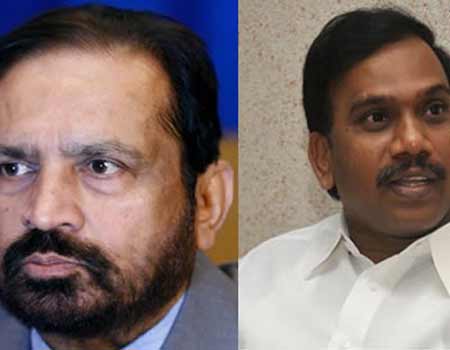
Face of the Scam: Suresh Kalmadi
The Commonwealth Games held in India was an even that was soaked in controversies and corruption to say the least. While the organizing committee drew flak for various allegations like child labour, sex slavery, environmental impact, racism and financial costs, the one that shocked the nation was the humungous amount of funds that had been mishandled by them. The chairman of the organizing committee was, resultantly, arrested on charges of 'criminal conspiracy and cheating.'
3. 2G Spectrum Scam

Cost: Rs 176,000 crore
Face of the Scam: A. Raja & M. K. Kanimozhi
The 2G scam is one of the latest scams that have hit our country driving it to incur huge losses. And caught at the centre of the embarrassing controversy was the Telecom Minister, A. Raja himself. The scam became bigger with new revelations of the involvement of politicians, bureaucrats, corporate personalities, media persons and lobbyists. The granting of licenses to various companies led to a massive loss to the exchequer. Also, daughter of political heavyweight,M. Karunanidhi, M. Kanimozhi was also arrested on charges of being a co-conspirator in the scandal.
4. Scorpene Submarine Scam

Cost: Rs 18,978 crores
Face of the Scam: Ravi Shankaran
The Scorpene submarines scam was one of the biggest corruption scandals faced by the country and including the navy. In the scandal, secret Navy documents were sold to the makers of the Scorpene submarine. The Indian government had approved the 19,000 crore submarine deal with the French company. The purchase of six Scorpene submarines cost the Indian government a lot more than its actual price.
5. Stamp Paper Scam

Cost: Rs 20,000 crores
Face of the Scam: Abdul Karim Telgi
The Stamp Paper scam was perhaps the most innovative scam in the list. Abdul Karim Telgi, a former fruits and vegetables seller, duped the nation of crores of rupees by printing fake stamp papers. He began his counterfeit career by making fake passports after which he started selling fake stamp papers to banks, insurance companies, share broking firms and bulk purchases. What was surprising, was the involvement of many police officers and other government employees. In fact, one police officer was said to have assets worth Rs. 100 crores despite earning only Rs. 9000 a month.
6. Bofors Scam

Cost: Rs. 400 million
Face of the Scam: Ottavio Quattrocchi
The Bofors scandal that hit the country was a major corruption scandal which changed the fate of the, then ruling, Congress party. Top politicians like Rajiv Gandhi and S.K. Bhatnagar and high profile names like Win Chadha and the Hinduja family were accused of "receiving kickbacks from Bofors AB for winning a bid to supply India's 155 mm field howitzer." The scale of the corruption was such that it immediately led to the defeat of the government headed by Rajiv Gandhi. Italian businessman Ottavio Quattrocchi, was the prime accused in the scandal and was chased by the CBI for years.
7. Mining Scam

Cost: Rs. 300,000 crores
Face of the Scam: Naveen Patnaik government
This scam was plundering at its best with the Naveen Patnaik led government exploiting the state's minerals to the tune of lakhs of crores of rupees. Apparently, the mine owners had been illegally using fake Transit Passes to transport minerals from Orissa to other states. The plundering was a large scale one and involved many high profile people from the government and bureaucracy.
8. Fodder Scam

Cost: Rs. 950 crores
Face of the Scam: Lalu Prasad Yadav
Bihar's most famous scam was the one involving fodder and ex- Chief Minister Lalu Prasad Yadav. The officials of the Bihar state government embezzled funds worth Rs. 950 crores by fabricating vast herds of fictitious livestock for which fodder, medicines and animal husbandry equipment were acquired. Soon, Lalu resigned from the post following immense pressure from all quarters owing to his close involvement in the case.
9. Hawala Scam

Cost: US$ 18 billion
Face of the Scam: L.K Advani/ Late Narasimha Rao
Hawala scam was probably the first scam that gave the public an idea of the the loot of national treasure that was being implemented by the top politicians. The scam revolved around the payments that the politicians received from hawala brokers, who basically fund terrorism around the globe. Many prominent politicians like LK Advani, Arjun Singh, Yashwant Sinha, Kalpnath Roy, VC Shukla, Madhavrao Scindia, Sharad Yadav, Buta Singh, Natwar Singh and Madan Lal Khurana were indicted in this case, but no action was taken against them due to lack of hardcore evidence.
10. Satyam Scam

Cost: Rs. 14,000 crores
Face of the Scam: B. Ramalinga Raju
The Satyam Scam was the biggest corporate scam that the country ever saw. The founder of the Satyam Group, Raju, resigned after he admitted to fudging the account books for years and falsely inflating the profit figures and revenues of Satyam for years. The credibility of the company fell hugely, owing to the scam and it was finally taken over by the Mahindra Group.


